Reviewing the 3D Layered Bat SVG for Embroidery
As a designer who spends half my life staring at digitized files and the other half watching needles punch through fabric, I have learned to be skeptical of trendy digital assets. We see countless 3D SVG files marketed for paper crafting, but translating that aesthetic into thread requires a critical eye. Recently, I evaluated the 3D Layered Bat Paper Cutting SVG Decor to determine if it holds up as a viable machine embroidery design for real-world applications. This is not just about whether the file opens correctly; it is about whether the final finished product looks professional, durable, and commercially viable.
First Impressions: Mood and Visual Personality
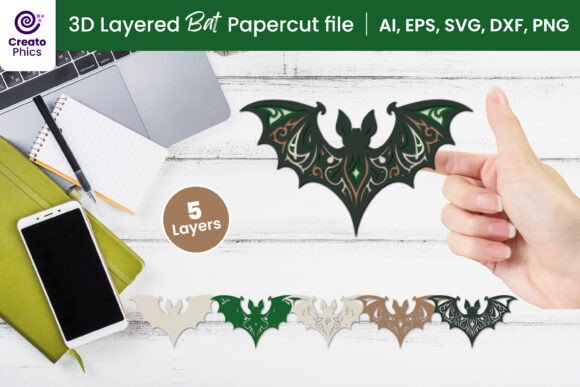
The immediate appeal of this design lies in its structural depth. Unlike flat silhouettes, the layered approach mimics the shadow play of physical papercuts. For embroidery, this suggests a need for careful planning regarding thread colors and stitch density. The mood is distinctly gothic yet playful, making it versatile beyond just Halloween. It fits comfortably within the Shapes category but offers more narrative weight than a simple icon. When I first loaded the preview, I noticed the clean lines and distinct separation between layers. This is crucial because muddy details disappear under thread. The design feels modern, appealing to customers who want spooky decor that remains stylish year-round, not just in October.
Real-World Application: From Digital File to Stitched Goods
To test its practicality, I imagined this design on several common handmade product types. The most promising application appeared to be a custom tote bag design. Imagine a heavy canvas tote with the bat layered in varying shades of charcoal and black. The texture of the canvas would support the fill stitch areas well, preventing puckering. Another strong candidate is sweatshirt embroidery. A oversized crewneck with this motif on the back or chest could become a staple small shop product for boutique brands targeting alternative fashion enthusiasts.
I also considered its use in holiday embroidery gifts. For a client looking for unique personalized gift options, this design could be scaled down for a set of kitchen towels or a decorative pillow cover. The key here is scaling. Because the original asset is a 3D layered bat paper cutting SVG decorative bat 3D papercut, it relies on negative space. In embroidery, we must ensure that the gaps between layers are wide enough to accommodate the needle penetration without causing the fabric to pull or distort.
Technical Considerations for Embroiderers
Translating a paper-cut aesthetic to thread involves specific technical challenges. The primary concern is stitch density. If the original SVG layers are too close together, stitching them as solid fills will create a stiff, cardboard-like feel. To maintain the "layered" illusion without sacrificing comfort, I recommend using a combination of satin stitch for borders and lighter fill stitch patterns for the interior shapes. Alternatively, treating some layers as applique design elements could reduce bulk significantly. By cutting fabric layers and stitching them down, you preserve the dimensional look while keeping the garment wearable.
Hoop size is another critical factor. This design likely requires a medium to large hoop to capture the full effect of the layers. Attempting to shrink it too much for a small embroidered patch might result in lost detail. Always check the minimum recommended size in the digital embroidery file documentation. If that information is missing, run a test stitch on scrap fabric at various scales to find the breaking point where details merge.
Fabric and Stabilizer Strategy
The success of this embroidery project depends heavily on material choice. On thin or stretchy fabrics, such as jersey tees or baby clothes, the weight of multiple stitched layers can cause sagging. For these items, a cut-away stabilizer is non-negotiable. For structured items like caps or bags, a tear-away may suffice, but I prefer cut-away for durability in commercial pieces.
Dark fabrics present a unique opportunity here. Since the design is inherently dark-themed, stitching black-on-black can look sophisticated if you vary the sheen of your threads. Use matte rayon for the base layers and glossy polyester for the top layers to create visual depth without changing color. However, on light fabrics, you must ensure the underlying layers do not show through unintentionally. A backing fabric or dense underlay stitches can help mask the base material.
Commercial Viability and Brand Consistency
For Etsy sellers and craft business owners, this design offers strong potential for commercial embroidery. It stands out in a market saturated with generic pumpkins and ghosts. The layered look suggests higher effort and value, allowing for a higher price point. When creating printable mockup images for your online store, ensure the lighting highlights the texture of the stitches. Customers buy with their eyes, and showing the dimensionality of the thread work builds trust.
However, always verify licensing before selling. While many SVGs are sold for personal use, commercial rights for finished physical goods differ from digital resale. Confirm that the design assets provider allows you to sell stitched items. If the license is unclear, reach out to the creator. Protecting your small business merchandise from copyright issues is as important as the quality of the stitch.
Practical Designer Notes
- Test on Scrap First: Never stitch directly on your final garment. Use the same fabric and stabilizer combination to check for registration issues.
- Check Thread Contrast: Ensure each layer is distinguishable. If layers blend too much, the 3D effect is lost.
- Inspect Small Details: Zoom in on the digitized file. Are there tiny jumps or unnecessary trims that could slow down production?
- Mockup in Black and White: This helps identify value contrast issues that color might hide.
- Verify File Formats: Ensure the embroidery file comes in formats compatible with your machine (PES, DST, JEF, etc.). If only SVG is provided, you will need to digitize it yourself, which is a different skill set entirely.
Final Verdict
The 3D Layered Bat Paper Cutting SVG Decor is a compelling asset for designers willing to put in the technical legwork. It is not a plug-and-play solution for every fabric type, but with proper stabilization and thread selection, it produces high-impact results. It works best on structured items like totes, pillows, and heavy apparel where the stitch weight is an asset rather than a liability. For creative entrepreneurs looking to elevate their custom apparel offerings with a modern, gothic twist, this design is worth the experimentation. Just remember: the magic is in the execution, not just the download.